
A note on stewardship, time, and furniture that has lived
Most furniture is treated as something to be fixed.
Scratches are flaws. Wear is damage. Age is something to erase.
I see it differently.
I restore not to make furniture look new, but to help it continue.
Furniture Is a Record of Living
Every piece that comes into my care has already lived a life.
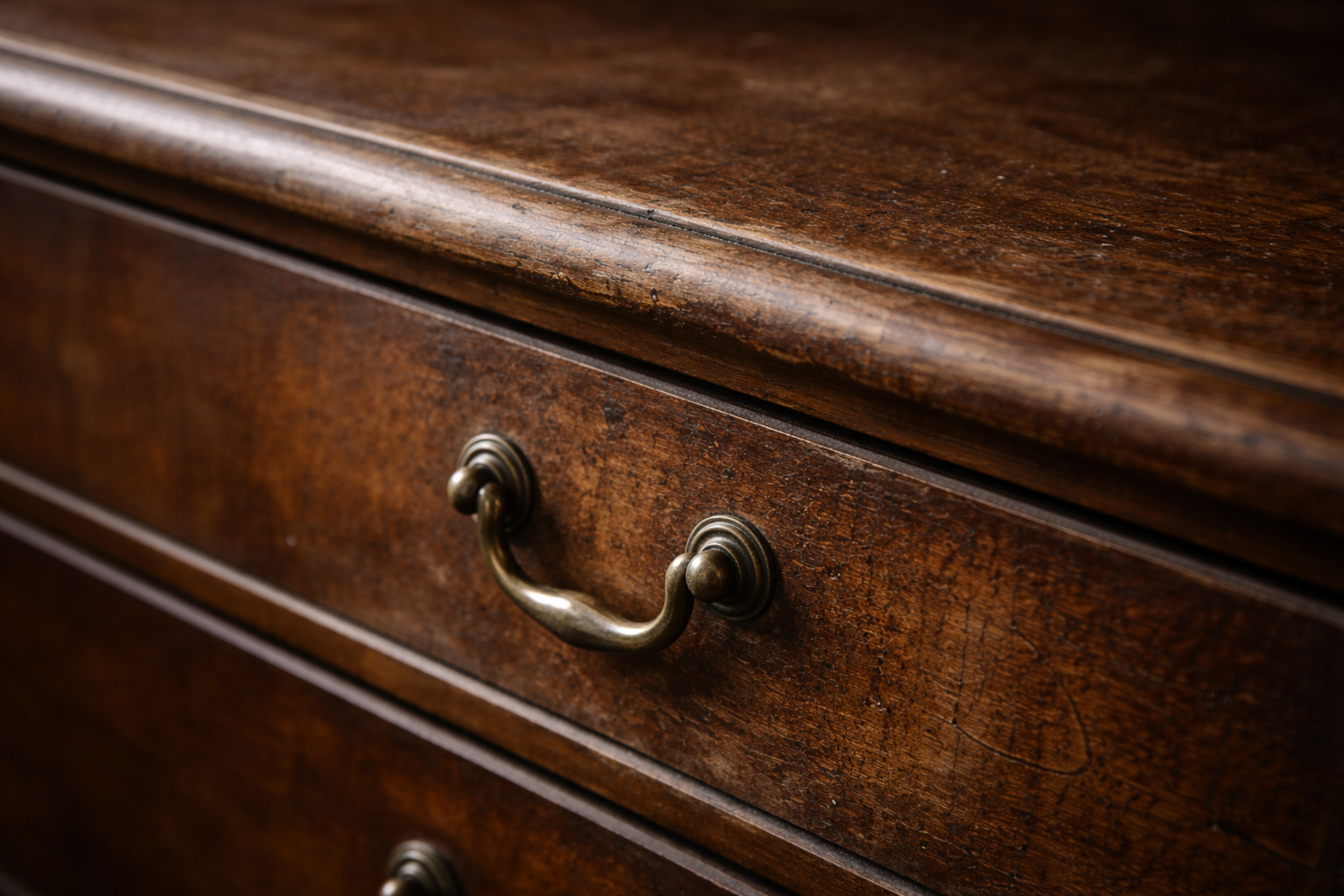
Hands have opened its drawers. Sunlight has faded its surface.
Moves, homes, and years have left quiet marks.
Those marks are not mistakes.
They are evidence.
To remove them entirely would be to interrupt a story that has been unfolding long before I was here to witness it.
Restoration Is Not Ownership
When a piece enters my workshop, it is not “mine.”
I treat it as a temporary responsibility—one moment in a longer timeline.
That perspective changes everything.
I ask different questions:
- What must be stabilized so this piece can continue?
- What should remain untouched so its history stays visible?
- What work can be done without pretending the past didn’t happen?
Often, the most respectful choice is to do less.
Why Restraint Matters
Modern restoration often aims for transformation.
Before-and-after photos reward contrast.
My work rarely photographs that way.
Instead of dramatic change, I aim for quiet integrity:
- Structures made sound again
- Finishes conserved rather than replaced
- Original details protected, even when imperfect
Restraint requires patience.
It requires saying no to unnecessary improvement.
It requires trust that age carries its own beauty.
Ethics Over Aesthetics
I avoid aggressive stripping.
I avoid modern finishes that erase texture and time.
I avoid altering proportions or details to suit current trends.
Not because I can’t—but because I shouldn’t.
Every intervention is a choice, and every choice leaves a trace.
I choose reversibility, honesty, and respect.
A Practice, Not a Process
Each restoration is documented in a Restoration Journal—not as a technical report, but as a written reflection.
I record:
- What the piece is
- Where it has been
- What condition it arrived in
- What was done—and what was intentionally left undone
Over time, these journals form an archive.
Not of products, but of care.
Furniture That Continues
A restored piece should not feel finished.
It should feel ready.
Ready to be used again.
Ready to gather new marks.
Ready to outlive me.
That is the work.